What Is Medical Billing? A Complete Guide for Patients and Providers
Learn how medical billing works from the patient visit through insurance payment, including the key terms, people, and steps involved.

Every time you see a doctor, a quiet financial process kicks off behind the scenes. It starts before you leave the exam room and doesn't finish until your insurance company and your provider have settled up sometimes weeks later. That process is medical billing, and understanding how it works can save you money, spare you confusion, and help you spot mistakes before they become problems.
This guide walks through what medical billing actually is, how it works step by step, and the terms you'll run into along the way whether you're a patient trying to make sense of a bill or a provider trying to keep your practice's revenue healthy.
What Is Medical Billing?
Medical billing is the process of turning a patient visit into a claim, submitting that claim to an insurance company, and collecting payment for the services provided. It sits at the intersection of healthcare and finance: a medical biller takes the clinical work a provider did an exam, a procedure, a lab test and translates it into a standardized claim that insurance companies can process and pay.
Done well, medical billing is invisible. Claims go out accurately, insurance pays its share, and the patient's portion is clear and correct. Done poorly, it's the reason claims get denied, patients get confusing bills, and practices wait months to get paid for work they already completed.
Why Medical Billing Matters
For providers, billing is the financial engine of the practice. A clinic can deliver excellent care and still struggle to stay open if claims are submitted incorrectly, denied repeatedly, or paid late. Industry data has shown claim denial rates climbing toward double digits in recent years, and every denied claim represents delayed or sometimes permanently lost revenue.
For patients, understanding billing means the difference between opening a bill with confidence and opening it with dread. Knowing why a charge appears, what your insurance covered, and what you're actually responsible for turns a confusing document into something you can act on.
The Medical Billing Process, Step by Step
Although every practice's exact workflow varies slightly, medical billing generally follows the same core sequence:
1. Patient registration and insurance verification. Before or during your visit, the practice collects your personal and insurance information and verifies that your coverage is active. This step catches issues like an expired policy or a plan that doesn't cover a specific service before they turn into a denied claim later.
2. The visit itself. Your provider examines you, performs any necessary procedures, and documents everything in your medical record. This documentation becomes the foundation for the claim.
3. Medical coding. A coder (sometimes the same person as the biller, sometimes a separate role) translates the visit into standardized codes CPT codes for procedures, ICD-10 codes for diagnoses. These codes tell the insurance company exactly what happened and why.
4. Charge entry and claim creation. The coded information is compiled into a claim, along with the charges for each service. This claim is checked often called "claim scrubbing" for errors before it's sent out, since even a small mismatch between a code and a diagnosis can trigger a denial.
5. Claim submission. The claim is sent electronically to the insurance company (the "payer"), usually through a clearinghouse that checks the claim's formatting before it reaches the payer.
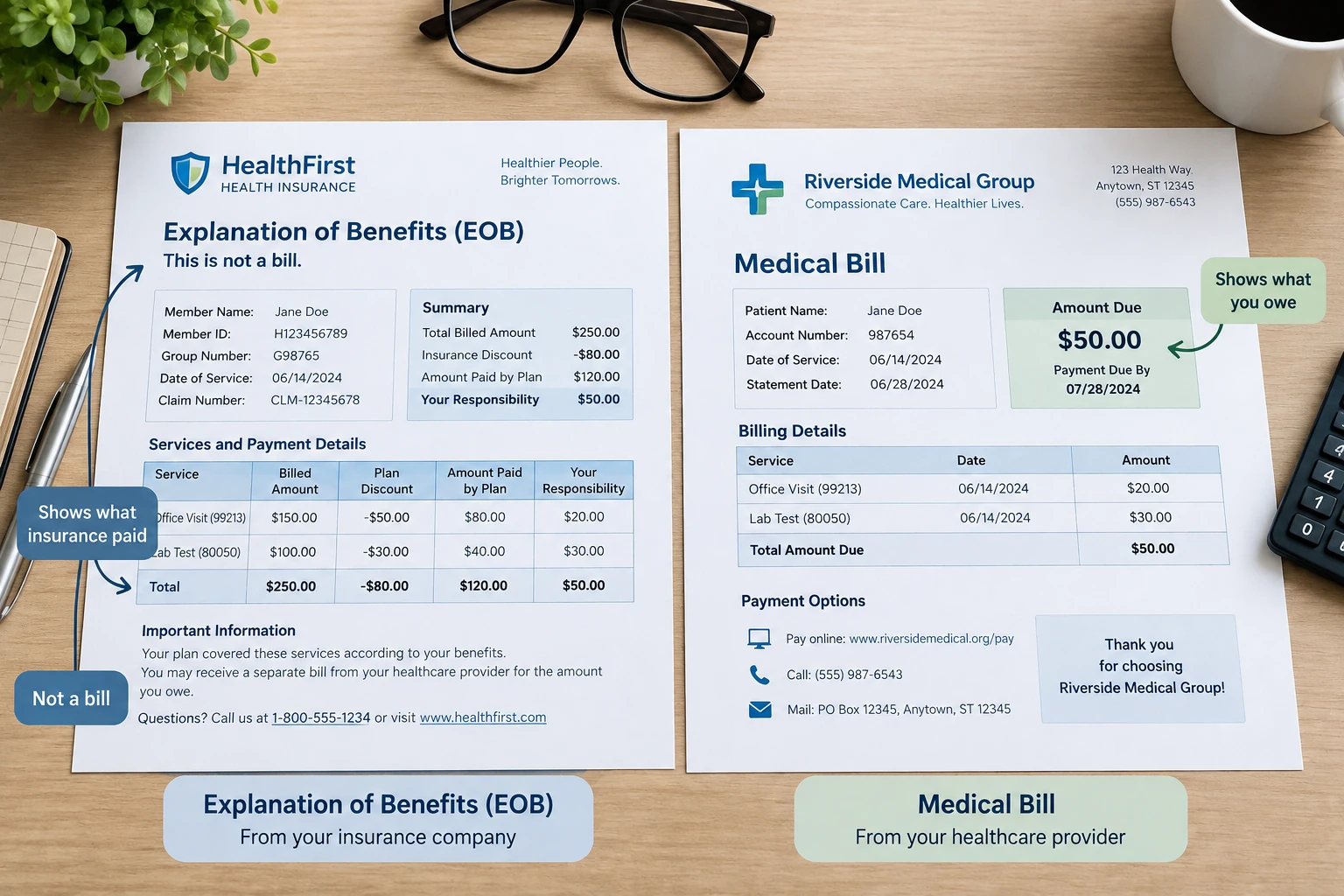
6. Payer adjudication. The insurance company reviews the claim against the patient's policy and decides what to pay, what to adjust, and what if anything the patient owes. This decision comes back to the practice as a remittance advice, and to the patient as an Explanation of Benefits (EOB).
7. Payment posting. The practice records the payment from the insurance company against the patient's account.
8. Patient billing. Whatever portion the patient owes a copay, deductible, or coinsurance is billed directly to them.
9. Denial management and follow-up (when needed). If a claim is denied or underpaid, the biller investigates why, corrects the issue, and either resubmits the claim or files an appeal.
That last step is where a lot of practices lose money quietly. A denied claim isn't necessarily a lost claim but only if someone catches it, understands why it was denied, and knows how to fix it.
Key People Involved in Medical Billing
- The provider delivers and documents the care.
- The medical coder translates that care into standardized codes.
- The medical biller builds and submits the claim, then follows up on payment.
- The payer (insurance company) reviews and pays the claim according to the patient's plan.
- The patient is ultimately responsible for any portion of the cost their insurance doesn't cover.
In many smaller practices, one person handles both coding and billing. In larger practices, these are separate roles and increasingly, many practices choose to outsource billing entirely to a dedicated billing company to reduce errors and free up staff time.
Common Medical Billing Terms to Know
A short glossary of terms you'll see throughout this process:
- Claim: The formal request sent to an insurance company for payment.
- CPT code: A code identifying the specific procedure or service performed.
- ICD-10 code: A code identifying the diagnosis or reason for the service.
- EOB (Explanation of Benefits): A statement from your insurer explaining what was billed, what they paid, and what you may owe. It is not a bill.
- Copay: A fixed amount you pay for a covered service, due at the time of visit.
- Deductible: The amount you must pay out of pocket before your insurance starts covering costs.
- Coinsurance: The percentage of a covered service you're responsible for after meeting your deductible.
- Denial: When an insurance company refuses to pay a claim, in whole or in part, usually with a specific reason code attached.
- Clean claim: A claim submitted with no errors that gets paid on the first try, without needing correction or follow-up.
Medical Billing vs. Medical Coding
These two roles are closely linked but distinct. Coding is about translating clinical documentation into standardized codes. Billing is about using those codes to build, submit, and follow up on a claim until it's paid. Think of coding as translating the story of the visit into a language insurance companies understand, and billing as making sure that translated story actually gets read, believed, and paid for.
Common Challenges in Medical Billing
Even a well-run practice runs into friction. The most frequent issues include:
- Denied claims: often due to coding errors, missing prior authorization, or eligibility issues that weren't caught before submission.
- Slow reimbursement: claims that sit unpaid for weeks or months, straining cash flow.
- Confusing patient bills: when the connection between the EOB, the itemized bill, and what a patient actually owes isn't communicated clearly.
- Compliance risk: billing involves protected health information, so every step has to meet HIPAA requirements around how that data is handled and stored.
We'll cover each of these in more depth in upcoming posts including a full breakdown of the most common reasons claims get denied, and exactly how to read your EOB line by line.
The Bottom Line
Medical billing is the process that turns clinical care into a paid claim and it touches everyone involved, from the provider delivering care to the patient opening the bill. Understanding the basic flow, from registration to payment posting, makes it much easier to catch errors early, ask the right questions, and avoid the confusion that so often comes with a medical bill.
Whether you're a patient trying to understand a statement or a practice trying to tighten up your revenue cycle, the fundamentals are the same: accurate documentation, accurate coding, and a clean claim the first time around.
Frequently Asked Questions About Medical Billing
What's the difference between a medical bill and a claim?
Who submits a claim to my insurance?
Your provider's office usually a medical biller or billing company working on their behalf submits the claim electronically, typically through a clearinghouse that checks it for errors before it reaches your insurer.
Why do I get a bill after insurance already paid?
Insurance rarely covers 100% of a service. Once your insurer pays their portion, whatever remains your copay, deductible, or coinsurance becomes your responsibility, and that's what shows up on your bill.
Understand Your Medical Bill With Confidence
Medical billing can feel complicated, but understanding the basic process makes it much easier to know what you're being charged for, what insurance has paid, and what you may still owe.
From registration and coding to claim submission, payment posting, and denial follow-up, every step matters.
Have questions about your billing? Contact BillWise Health to learn more about medical billing and revenue cycle support.

See what's slowing your revenue cycle.
A focused review of your claims, denials, A/R, and credentialing gaps. No obligation, no software to install.