How to Read Your EOB (Explanation of Benefits): A Line-by-Line Guide
A line-by-line guide to reading your Explanation of Benefits and how to tell it apart from your actual medical bill.
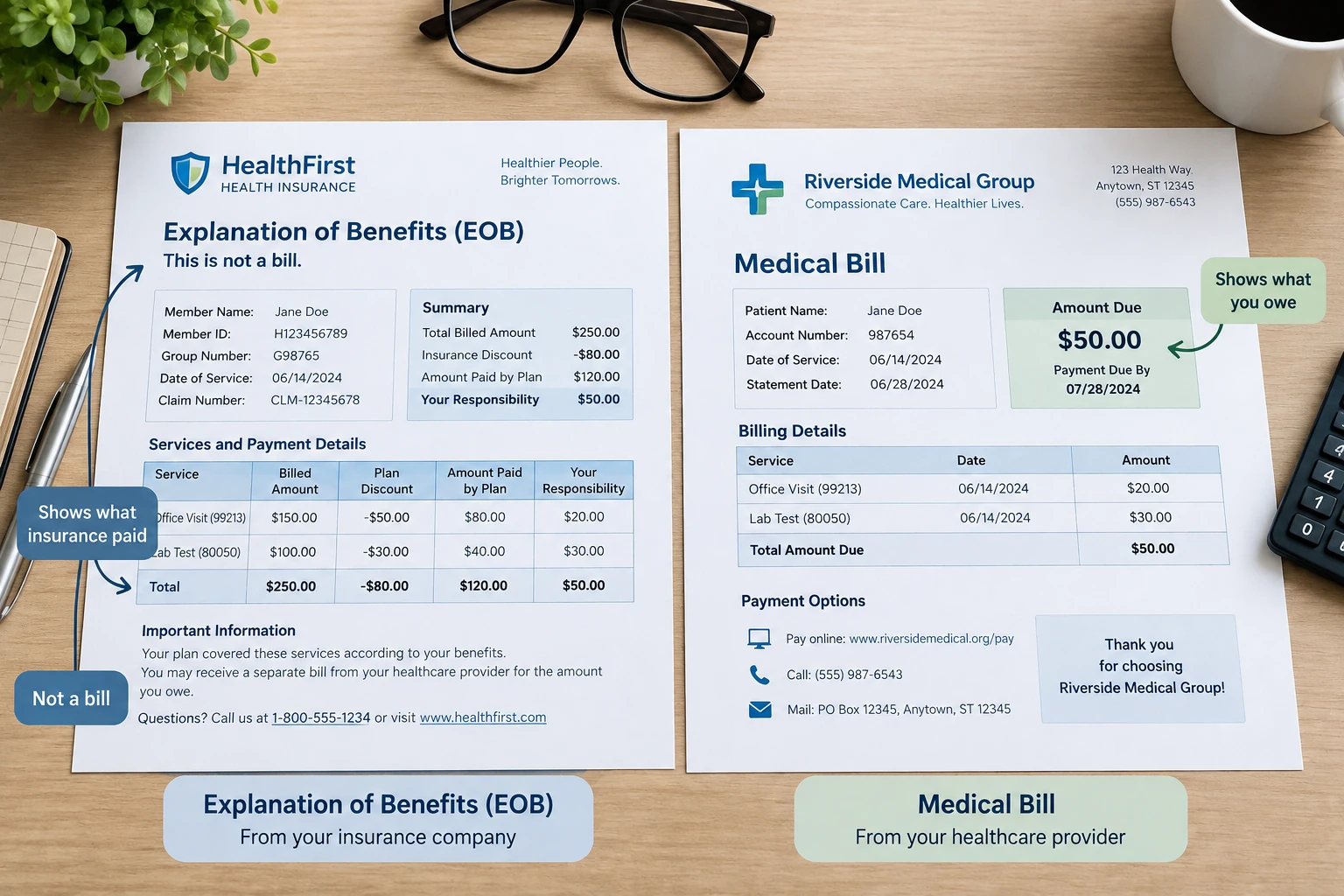
An Explanation of Benefits usually shortened to EOB is one of the most misunderstood documents in healthcare. It looks official, it has dollar amounts on it, and it arrives around the same time as an actual bill. It's easy to assume it's something you owe.
It isn't. An EOB is a summary from your insurance company explaining how they processed a claim. It's not a bill, and no payment is due based on an EOB alone. But it does contain the information that determines what you'll eventually be asked to pay so learning to read it is worth ten minutes of your time.
What Is an EOB, Exactly?
Every time a healthcare provider submits a claim on your behalf, your insurance company processes that claim and sends you a written summary of the outcome. That summary is the EOB. It shows what was billed, what your plan covered, what was adjusted off, and what portion if any you're responsible for.
Insurance companies are required to send an EOB for every processed claim, whether or not you owe anything. That's part of why so many people find them confusing: you might get an EOB for a visit where you owe nothing at all, right alongside one for a visit where you owe several hundred dollars.
Why Your EOB Looks Different From Your Bill
This is the single biggest source of confusion. The EOB comes from your insurance company and reflects how they processed the claim. The bill comes from your provider's office and reflects what they're now asking you to pay, after they've received your insurance company's payment.
The amounts can look similar, but they're not the same document, and they don't always arrive at the same time. Your EOB might show up a week or two before the actual bill, which is why so many people call their provider's billing office holding an EOB and asking, "Is this what I owe?"
Reading Your EOB, Line by Line
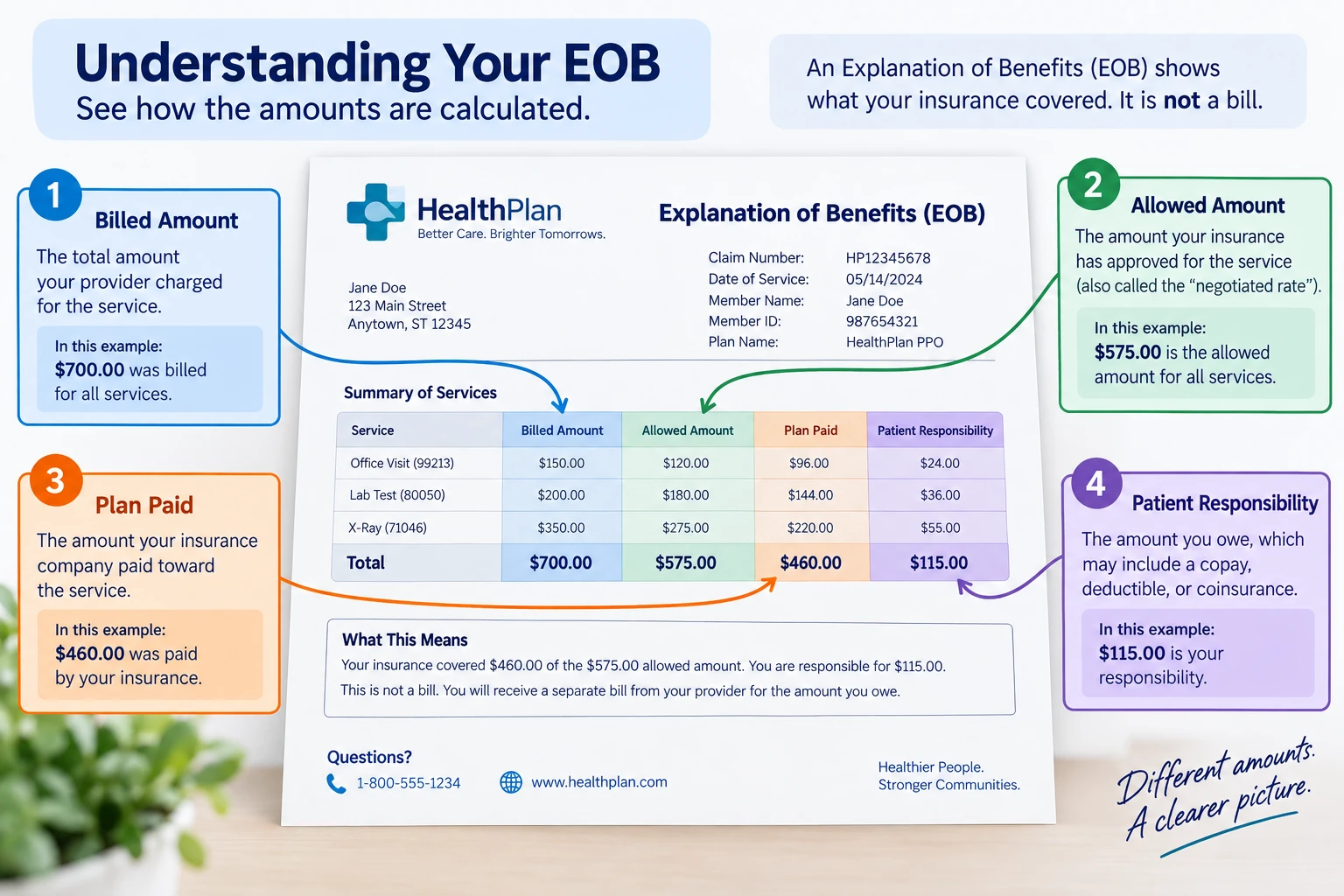
Every insurer formats their EOB slightly differently, but nearly all of them include the same core sections. Here's what to look for:
- Patient and subscriber information. Confirms whose visit this EOB covers useful to check first if you have family members on the same plan, since EOBs for a spouse or child can look identical at a glance.
- Provider and date of service. The provider who submitted the claim and the date the service happened. Match this against your own records if anything looks unfamiliar.
- Billed amount (sometimes called "amount charged"). What the provider's office originally billed for the service. This is almost never the final number it's the starting point before your insurance's negotiated rate is applied.
- Allowed amount (or "negotiated rate"). The amount your insurance company has agreed to pay for that service under your plan, based on their contract with the provider. Anything above this amount is typically written off by an in-network provider, not billed to you.
- Plan paid (or "amount paid"). What your insurance company actually paid toward the allowed amount.
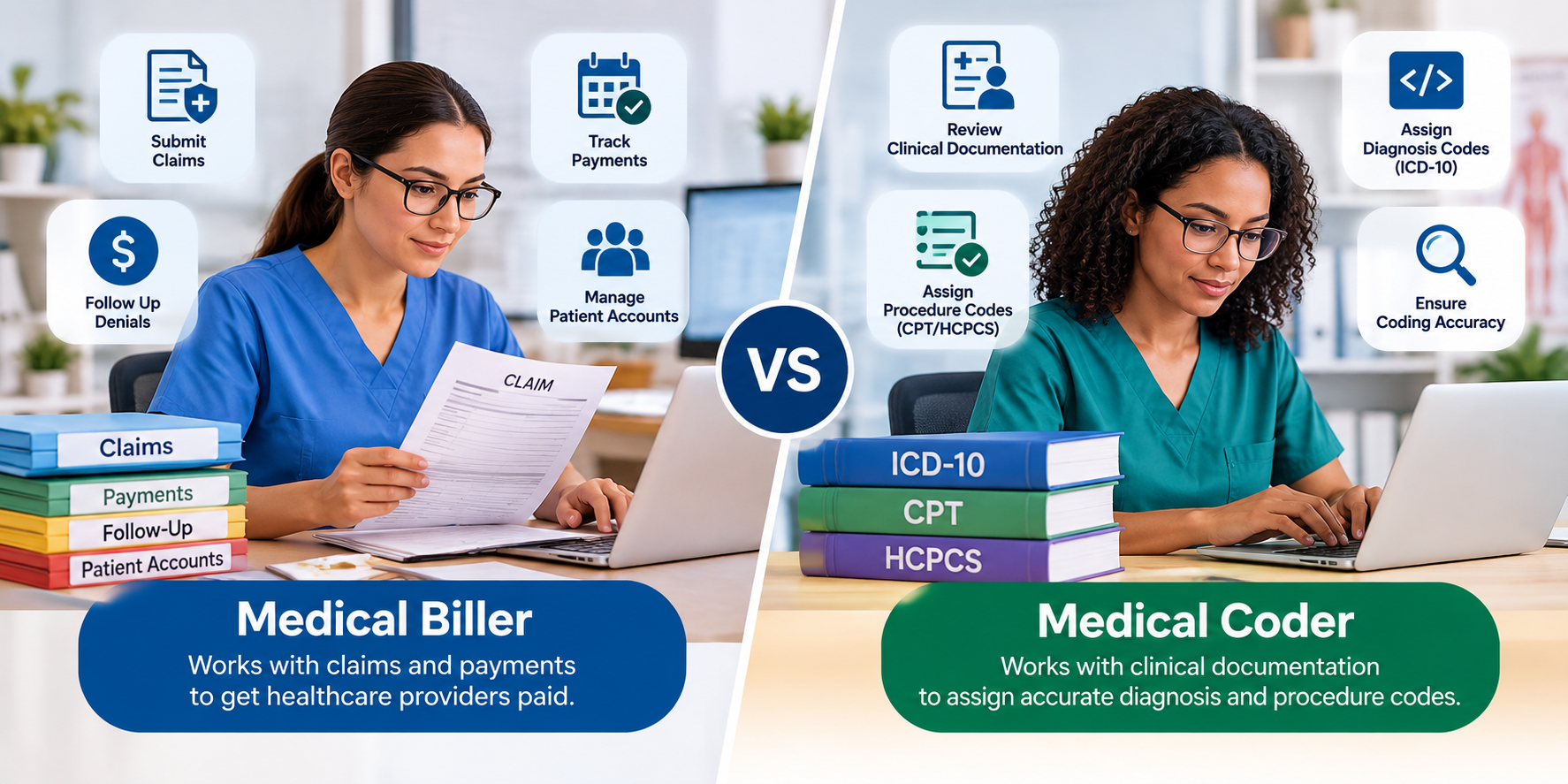
- Adjustment / reason codes. Short codes often labeled CO, PR, or OA explaining why a portion of the billed amount wasn't paid. These are the same family of codes providers see on the billing side, just presented in a patient-facing format.
- Patient responsibility. The amount left over after the plan payment and adjustments this is the number that should match what your provider eventually bills you for that visit.
- Deductible, copay, and coinsurance breakdown. Many EOBs separate patient responsibility into these three categories so you can see exactly why you owe what you owe, rather than one lump number.
- Remarks or notes section. Plain-language explanations tied to the reason codes above this is often the most useful part of the whole document if something looks off.
EOB vs. Medical Bill: The Key Difference
Think of it this way: the EOB is the insurance company telling you what happened. The bill is the provider telling you what to pay. The patient responsibility amount on your EOB should match the balance on your bill if it doesn't, that's worth a phone call before you pay anything.
Common Reasons Your EOB Might Show You Owe More Than Expected
- You haven't met your deductible yet. Early in the plan year, a larger share of visits falls to you until the deductible is met.
- The provider is out-of-network. Out-of-network care is often subject to different and less favorable allowed amounts, meaning more of the bill can fall to you.
- A service wasn't covered under your plan. Some procedures require prior authorization or aren't covered at all under certain plans.
- A coding or eligibility issue caused a partial denial. This is where an EOB and a denied claim overlap the reason codes on your EOB are the patient-facing version of the same codes your provider's billing team is working from.
Common questions
Is an EOB a bill?
No. An EOB is a summary from your insurance company explaining how a claim was processed. It shows what you may eventually owe, but it's not a request for payment, and you shouldn't pay based on an EOB alone.
Why is the amount on my EOB different from my bill?
The EOB reflects your insurance company's view of the claim at the time they processed it. Your bill comes from your provider's office and should reflect the same patient responsibility amount but timing differences or a subsequent correction can sometimes cause a mismatch worth calling about.
What do the CO, PR, and OA codes on my EOB mean?
These are short for Contractual Obligation, Patient Responsibility, and Other Adjustment. In plain terms: CO means the provider absorbs that amount, PR means it's your responsibility, and OA covers other types of adjustments. The remarks section usually spells out the specific reason in plain language.
What should I do if my EOB and my bill don't match?
Call your provider's billing office first — mismatches are usually a timing issue or a simple correction, not a red flag. Have both documents in front of you and reference the date of service so they can pull up the exact claim.
The Bottom Line
An EOB isn't something to dread it's actually the clearest window you have into how a claim was handled before the bill ever arrives. Once you know what each line represents, it becomes a tool for catching errors early rather than a source of confusion.
If a number on your EOB or your bill doesn't add up, don't guess reach out and ask. A quick phone call is almost always faster than trying to reverse-engineer a claim on your own.
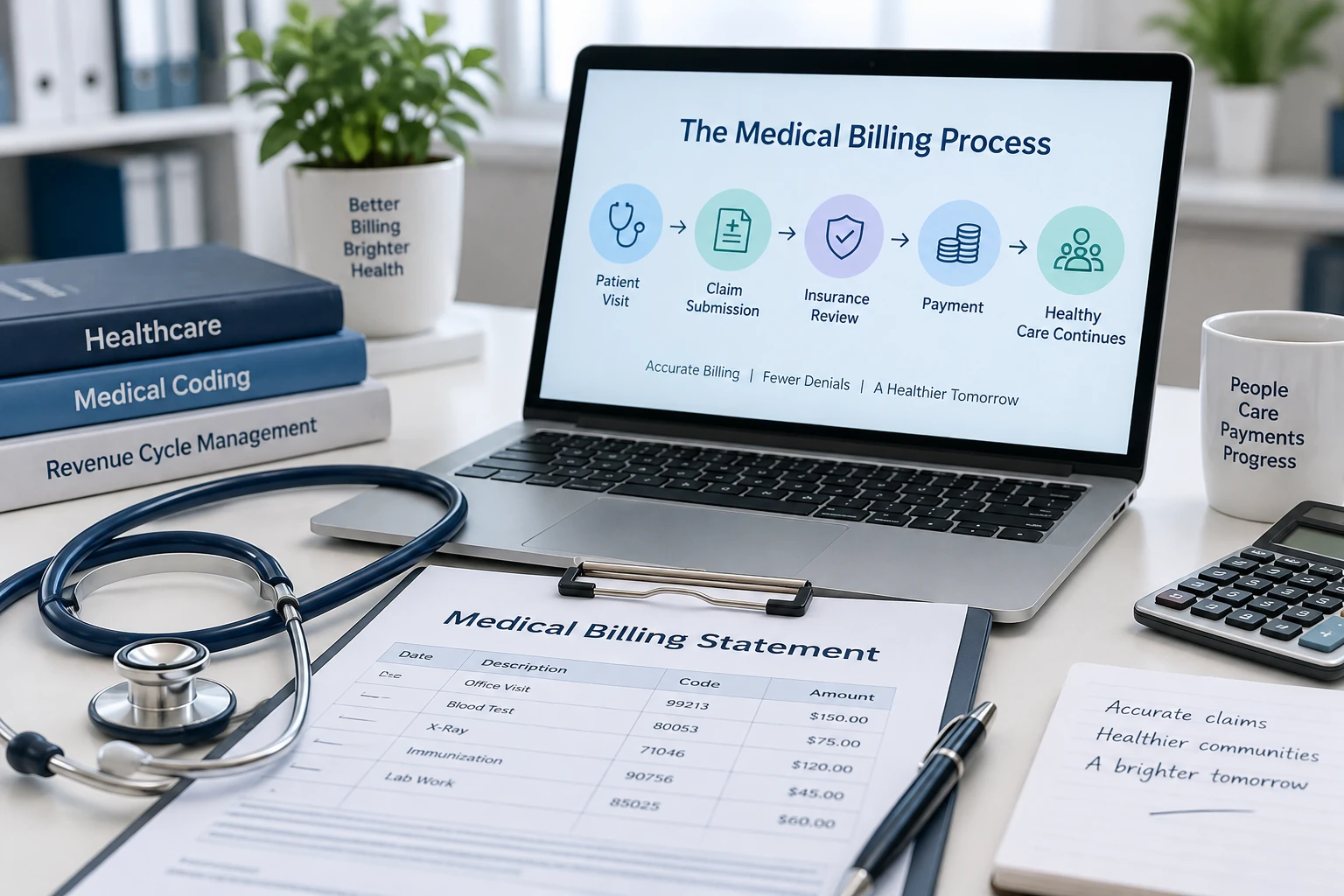
See what's slowing your revenue cycle.
A focused review of your claims, denials, A/R, and credentialing gaps. No obligation, no software to install.